Gerry secretly replaces and hides whisky in Amsterdam
Midwinter BreakGerry secretly replaces and hides whisky in Amsterdam is a sequence of small evasions that turns Gerry’s drinking into a physical routine: purchase, concealment, camouflage, disposal, and renewed drinking. His ingenuity keeps Stella from seeing the bottles, but the care devoted to hiding them also exposes his awareness that the habit is damaging their relationship and cannot be reconciled with his promises to stop.
Purchase and concealment
At a restaurant in Amsterdam, Gerry treats a tub of unfamiliar margarine as the solution to a problem with his blackened hand. He tells Stella what he intends to do, then leaves on the pretext of finding the toilet. Instead, he visits the small supermarket beside the restaurant and buys a half-bottle of Tyrone Superior whisky. The brand is unfamiliar and, to him, its likely origin is uncertain; its value lies in its size. He would accept almost any whisky so long as the bottle is flat enough to fit in his pocket.
The transaction is easy: there is no queue or language difficulty, and the only hesitation comes when Gerry pays with a high-denomination note. He pauses and buys a second half-bottle, reasoning that one may not be enough. The cashier looks at him askance. Gerry imagines the questions his appearance might raise: his sore chin, painted-looking black palm, lack of an overcoat, and wallet full of large notes. He smiles reassuringly, takes his change, and slips one bottle into each jacket pocket. The pockets’ flaps, which he had once thought unfashionable, now help conceal his purchases. He pats them down and thinks of himself as well balanced.
In the restaurant toilet, Gerry uses the margarine to rub away the black stain, washing his hand until the grey and yellow residue disappears down the drain and the skin smells only of soap. The clean hand and the hidden bottles are parallel products of the same brief excursion: one problem can be washed away, while the other is carried back into the room. Looking at himself in the mirror, he registers that buying two bottles has crossed a line, but he does not undo the purchase. His self-reproach accompanies rather than interrupts the concealment.
Drinking behind a closed door
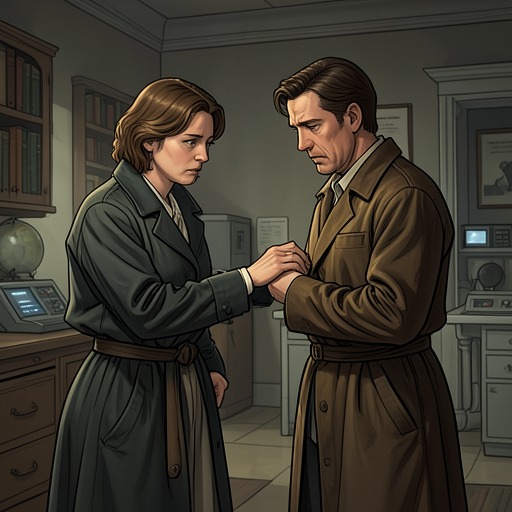
Later, in the hotel bedroom, Stella tells Gerry that he is not really present in her storyboard. When she is asleep, he moves her book to the bedside table, retrieves a half-bottle from his jacket, and goes into the bathroom. He closes the door and coughs to mask the sound of opening the cap before pouring a drink. Back in the bedroom, he drinks, finds his glass empty, and refills it with water. The bottle is no longer simply an emergency reserve in his pocket; it is part of a private drinking session conducted within a few feet of his sleeping wife.
The concealment has already nearly failed in the lift. When it stops at the third floor, something in Gerry’s pockets makes a glugging, gurgling sound, partly muffled by his raincoat. He wonders whether Stella heard it. Alone in the bedroom, he invents possible explanations, including brake fluid, waste pipes, or stomach noises. These imagined excuses show how readily he can convert a suspicious sound into a story that might protect him. He also knows Stella has not challenged him: she has said only that she is looking forward to bed.
As he drinks, he notices that he has put the glass down on the blank pad beside the telephone. The pad absorbs the sound, but he anticipates the wet ring the glass will leave, a shining zero. He also sees Stella as distant and not fully known to him. The narrative places his drinking beside that estrangement without establishing that one simply causes the other. Instead, secrecy and marital distance accumulate in the same room: Stella sleeps, while Gerry drinks and rehearses explanations for what she might have heard.
Transferring the bottles and disposing of the evidence
Before leaving the bedroom, Gerry pours the remaining whisky from a half-bottle into the larger duty-free bottle. He puts the empty in his trouser pocket, removes the second half-bottle from his jacket, and decants that as well in the bathroom with the door closed. He is careful not to wake Stella. Taking an extra plastic key card, he leaves the door slightly ajar so he can return without locking himself out or plunging the room into darkness. His precautions are methodical, though his shirt tail is hanging out and he has forgotten to put on shoes.
At the hotel’s waste bin, the first empty makes a loud metallic bang when he drops it through the opening. Gerry apologizes, then retrieves the second bottle with more care, sliding it down the inside of the bin. He associates the act with confession and an Act of Contrition, recalling the Catholic language of a firm purpose to amend one’s conduct. That vocabulary gives his resolve a familiar form, but it does not prevent him from drinking again. His passage through the hotel corridors becomes a drawn-out attempt to manage the consequences of his own secrecy.
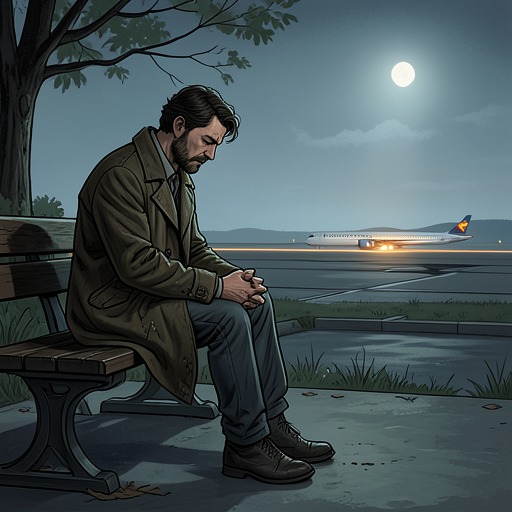
Having left the paper bearing the room number behind, Gerry cannot immediately find his way back. He wanders among identical magnolia-coloured doors, guided by the ice machine, trays of unfinished meals, and a print of a ruined Greek temple. Passing a half-eaten artichoke pizza, he considers eating it but refrains, treating that small restraint as another chance to amend his behaviour. He remembers that, as a teenager, he could sincerely resolve during confession never to repeat a sin and feel briefly uplifted. Now he recognizes the difficulty in applying that pattern to alcohol: resolving to stop while drunk is the wrong moment, and Stella is among the people his drinking hurts.
Return and renewed drinking
Gerry’s thoughts move from the possibility of getting help to images of vanishing in the hotel corridors, but the immediate task remains finding the room. He eventually recognizes the Greek-temple print and discovers room 396 with its door slightly open. The familiar suitcase and his coat are there; Stella is asleep in bed. He thinks of himself as home at last, despite having been only a short distance away. After successfully hiding the empties, he pours himself another drink.
The return gives the episode its decisive turn. Gerry has managed the practical work of concealment—replacing the contents of the larger bottle, removing the empties, and getting back to the room—but these successes do not amount to recovery or a renewed commitment he can sustain. His thought about harm to Stella demonstrates that he is not ignorant of the stakes. Rather, the scene shows knowledge and action pulling in opposite directions: he can name the injury, remember the promise of change, and still drink once more. The hidden bottles therefore register both his resourcefulness and the self-deception that makes that resourcefulness serve the dependence.